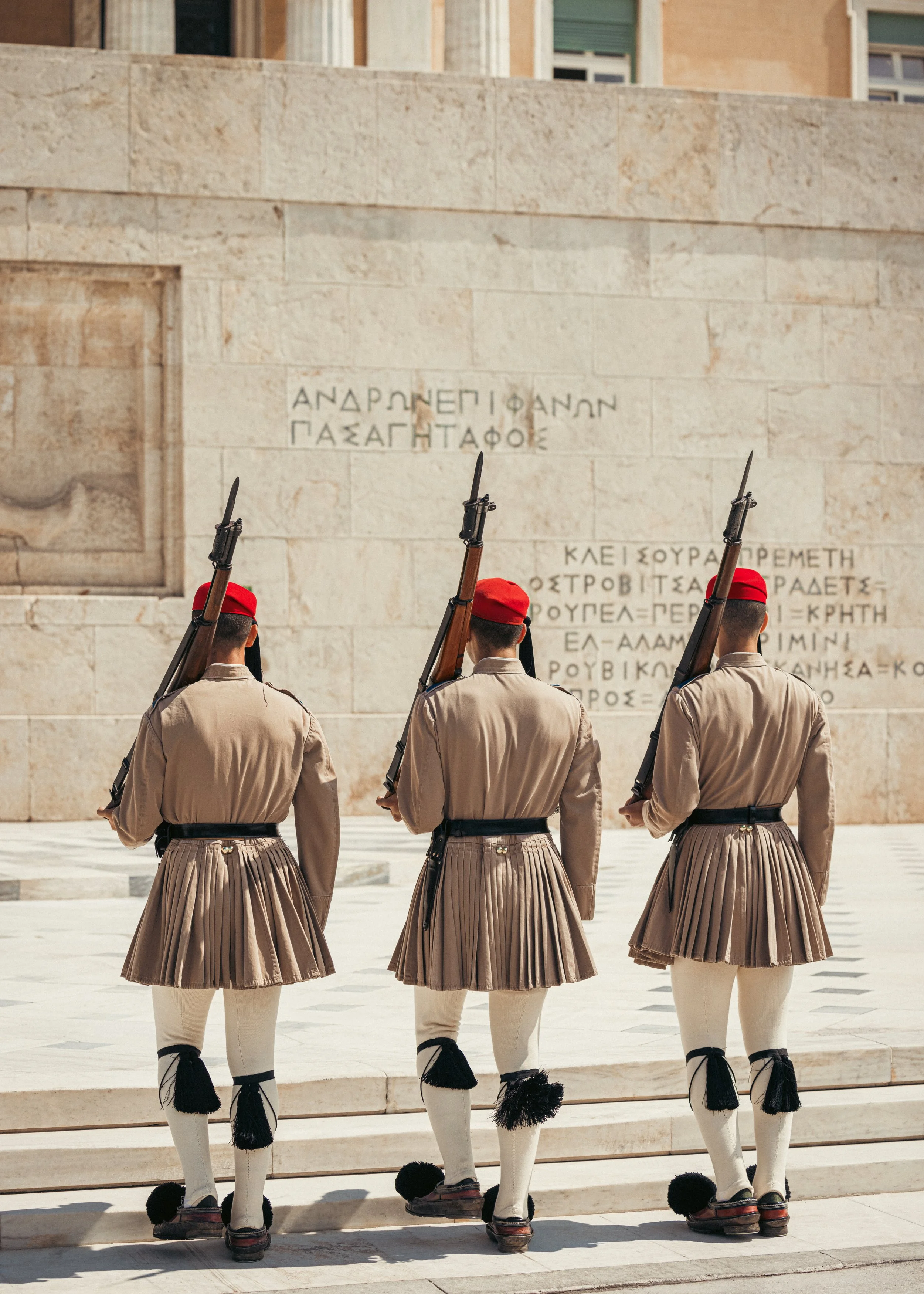
Greece Odyssey (pilot): legacy, identity and belonging
Location: Athens and the Cyclades
Cohort Size: 5 participants
Project Objective:
Grounded in Hellenic history and myth, this project uses archetype frameworks to help veterans reframe their personal narratives and reconnect with a sense of purpose. Activities are intentionally slower-paced and enriching - focusing on presence, curiosity, and new skills rather than physical challenge. Through cultural immersion - history, mythology, local food, and architecture -participants are invited to engage the mind and senses at a slower, more intentional pace.
Why it matters:
For veterans stuck between old service identity and uncertain futures, this program restores authorship and agency -shifting from survival to meaningful contribution. It's a vital step in helping veterans recalibrate, reflect, and re-enter civilian life with confidence and clarity.
Who it is designed for:
Veterans who have recently transitioned out of high-intensity service roles - those who have ‘just stepped off the train’ and are navigating the early stages of civilian life. After years of discipline, tempo, and operational demand, many find it difficult to slow down, let alone recalibrate. This experience offers a gentler re-entry. It’s ideal for individuals learning how to relax again. How to observe. How to appreciate stillness. And most importantly, how to reconnect with life beyond uniform.
What they get out of it:
Permission and practice at a different pace. Tools for reframing their personal narrative. Hellenic mythology and archetype frameworks provide new language for understanding their journey -shifting from reactive survival to active authorship over their story. Veterans learn that slowing down isn't failing -it's recalibrating. The Greek environment teaches observation, presence, and how to engage with stillness productively. Mental stimulation through enrichment rather than adrenaline. Proof that intellectual engagement exists beyond operational intensity. Renewed sense of agency. They can shape their next chapter rather than just endure transition. Gain confidence that civilian identity can be deliberate and meaningful, not just an absence of service. The experience validates that reflection and re-entry are active processes they control, not states they passively survive.